
Before We Start the Conversation
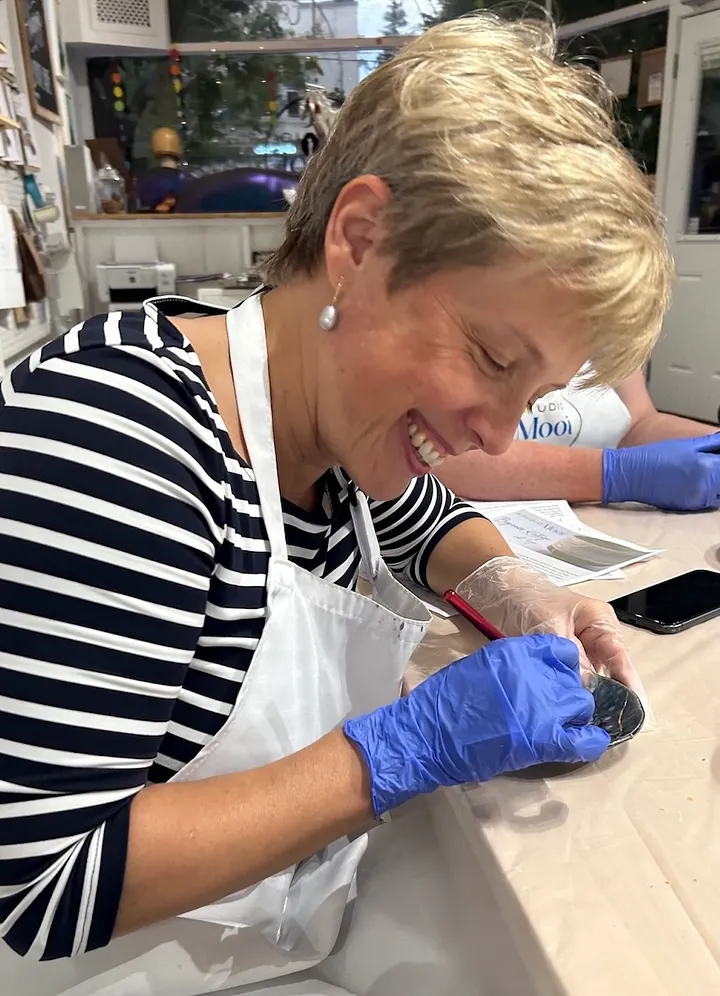
The image above this article shows me at a Kintsugi workshop. Kintsugi is the traditional Japanese art of repairing broken and chipped pottery using lacquer mixed with gold powder. The philosophy behind this art teaches that cracks repaired with gold become part of an object’s beauty — just like in life crafting, our experiences (even the painful ones) aren’t flaws to hide but material we intentionally shape into a more meaningful life.
We Have More Choice Than We Believe
Many of us believe we are making choices. But often, we’re just following momentum.
I know I was… for a long time. I moved… acted… pushed hard… I didn’t pause to ask why I was doing what I was doing — or whether it was actually what I wanted. I was simply in motion.
Over time, through both my personal life and my work, I started pausing more. I began asking questions like: Why do I do this? Is this truly my want or is it something I absorbed along the way?
That’s where life crafting began for me — with one simple question: What do I really want?
Not what I should want.
Not what looks good on paper.
Not what others expect.
What I truly want — on a deep level.
This distinction came into my life with Maja Djikic’s work (Djikic, M., 2024). on psychology of self-development when I met her in 2016. Her work helped me differentiate between superficial or destructive wants — the goals we often pick up from our environment — and deep or core wants, which are rooted in our psychological needs, values, and sense of meaning.
Many of us never slow down enough to hear those deep wants clearly. But once we do, another question naturally follows: What is getting in the way of moving toward them?
Often, the answers show up as limiting beliefs, old fears, or protective patterns — patterns that once helped us survive, but now quietly shape our choices.
Life crafting isn’t about pushing harder. It starts with clarity around what we deeply want and then gently exploring what’s blocking that path.
That inner work can take many forms: therapy, expressive writing, reflections…
When those inner obstacles loosen their grip, forward movement stops feeling forced. Choices feel lighter. Actions feel more aligned.
This is what life crafting is for me: a compassionate, intentional process of reconnecting with what truly matters to us and shaping our lives from that place. In the life crafting process, we are both — the creator and the creation.
How I craft my life… An example…. One of Many…
A few years ago, I had a clear idea in my mind: I wanted to write a book about career management — to help people around me by sharing my experience.
The topic was clear. The structure made sense. I had years of experience and stories.
And yet, I couldn’t move on with this project. I kept circling the idea without taking real steps forward. And honestly, I was afraid… afraid I didn’t have enough expertise. …afraid of writing in English, which is not my first language. …afraid of being judged.
At the time, I thought the problem was discipline or confidence. But when I paused and asked myself the question I now return to often — What do I really want? — something shifted.
What I wanted wasn’t to publish a book. What I really wanted was to be heard… to be seen… to feel understood.
Writing, I realized, was less about building credibility and more about connection — first with myself, and then with others. It was a way to make sense of my experiences, questions, stories and ideas I had been carrying for years.
Once I saw that, the fear made more sense. It wasn’t there to stop me — it was there to protect something deeply important to me. Being visible, vulnerable, and truly seen.
So instead of asking, How do I push past this?
I asked, What if I write for myself first?
That shift changed everything. I stopped waiting to feel “ready.” I stopped trying to sound perfect. I focused on expressing myself.
The result is a book — filled with my passion and experience, as well as the passion and experiences of others, supported by science.
But more importantly, the process itself felt aligned and the result is that I feel more connected with myself and others.
This is what life crafting looks like in practice for me: clarity about what I deeply want, compassion for what has been holding me back, and gentle, intentional action from that place toward myself and the life I want.
Why Life Crafting
People often ask me why I speak about life crafting instead of life design or personal growth. The short answer is: words matter. They shape how we relate to ourselves — especially when we’re trying to change something in our lives.
“Life design” is a useful concept. It suggests intention, planning, structure. But design may also sound rigid, as if there’s a perfect blueprint we need to figure out and follow. Our lives rarely work that way.
The concepts of “personal growth” and “professional growth” can be meaningful. But for me, the word “growth” carries an unspoken message: that something is wrong with us now, and we need to become better or more. What if that’s not always true?
When I think about the work I do with myself, I don’t want it to be felt like fixing, optimizing, or moving in a straight line upward. I want it to be experienced as crafting — creative, hands-on and iterative. While you craft your life or yourself, you experiment, adjust, and respond to the material in front of you — your life, your energy, your values.
I believe that crafting leaves room for detours, pauses, and change. It allows us to be curious instead of judgmental, compassionate instead of harsh. It invites us to work with ourselves, not against ourselves.
My life crafting philosophy starts with listening deeply to what I want, proceeds with respectfully working with the protective patterns and wounds I’ve gained through life, and makes space for creativity, self-compassion, and experimentation.
For me, life crafting isn’t about becoming someone else. It’s about becoming more fully myself — at my own pace, in my own way.
References
Djikic, M. (2024). The possible self: A leader’s guide to personal development. Berrett-Koehler.
Get Nataliya Korchagina’s stories in your inbox
Join Medium for free to get updates. Subscribe using link below.
Share your thoughts on this post