
What happened
A couple of weeks ago, one of my former students — Peter — reached out to me with a great news. “Nataliya, I am having a second job interview with two hiring managers at 3 pm this Wednesday.” “Congratulations” I said, “Let’s quickly double-check whether you’ve done everything you need to do prior to it.” We went through a job interview preparation checklist. He seemed to be fully ready.
Around 4 pm on Wednesday, I was awaiting Peter’s call. I was expecting to hear something like “I nailed it”…however, what I really heard was something very close to a sob… ‘I think I totally failed the interview,’ Peter said.
Here is the gist of Peter’s story:
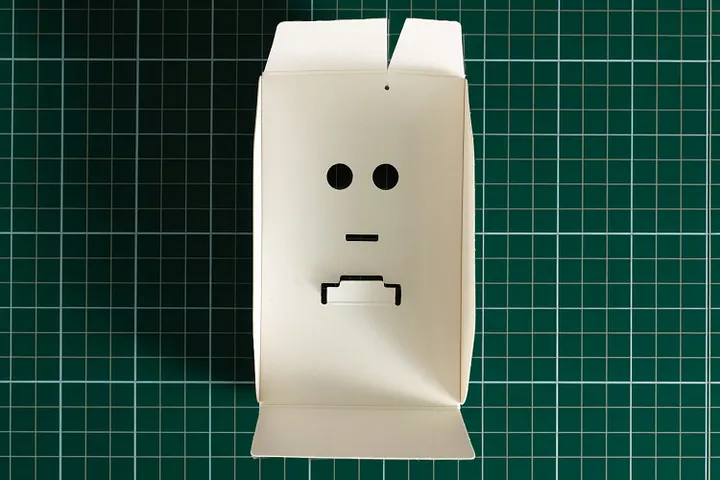
For the entire duration of the interview — 50 minutes — both interviewers didn’t have any expressions on their faces. I tried to engage them with a smile, a joke… I tried to refer to their own experience working for the company that I had uncovered via LinkedIn prior to the interview. No matter how much I tried to build some connection with them or make them react, their faces remained blank. When I was responding to their questions, I was looking at them trying to understand whether they were satisfied with my answers… Nothing… Their eyes and faces remained expressionless. Little by little, I could feel anxiety growing inside me, “Am I doing a good job? Am I failing?” No clue… Around 30 minutes into the interview, they asked me a simple question related to basic statistics, but I could not find an answer in my head(Note: Peter has a bachelor’s degree in advanced statistics). At that moment, I realized that my brain had shut down. It got totally numb…
I truly don’t remember how the rest of the interview went. The only thing I remember is that almost at its end they asked me whether I had any questions for them. At that moment, I noticed that they closed their notebooks. “Oh”, I said to myself. I guess they don’t expect me to ask any questions (Note: many interviewees don’t really have questions). I pulled out my list of questions. I asked them whether the current uncertain tariff situation had been impacting their business and how, if in any way, they had adjusted their business strategy to this threat. And when I was asking my questions, I noticed the first and only glimpse of a smile in the eyes of one of the hiring managers. I almost burst into tears…
Let me tell you what I said to Peter after he shared all the details about the interview:
You did a great job preparing. You did everything right during the interview. There is nothing you should criticize yourself for. Nothing was wrong with you. You did the best you could. What you experienced during the interview is called the lack of social mirroring in a social interaction.
As I said in one of my previous posts , we humans are wired for social mirroring. When we communicate with others, we need their signals — eye contact, nods, smiles, posture shifts, and shared reactions — to make sense of ourselves and to feel heard and understood. When those signals are present and authentic, we feel connected. When those signals are absent, our brains interpret this as disconnection or rejection. Hence, we get stressed and emotionally drained.
Some science to explain Peter’s reaction (if scientific facts are something that may bore you, move to the next section)
Giacomo Rizzolatti (2008) — a renowned neurophysiologist — uncovered the mirror-neuron mechanism in our brain that plays a fundamental role in our understanding of others’ actions. Because of this mechanism, we tend to mirror each other’s facial expressions and body language to get a better understanding of each other. In simple terms, because of this mechanism, if we want to survive, we must understand the actions of others. Hence, we rely on others’ facial expressions and actions to make sense of the world around us. If there are no facial expressions, our understanding of the world may fail.
Other psychologists (E. Tronick and his colleagues, 1978) conducted multiple “Still-Face” experiments, during which parents were asked to stop showing any facial expressions in the middle of an interaction with their infants for just 1–3 minutes. Shockingly, the negative effect of “Still-Face” on the infant’s state is immediate and strong. What happens? Infants experience an increased heart rate, elevated cortisol (stress hormone), and anxiety. These experiments show that humans require social mirroring for emotional regulation from early infancy.
A renowned neuroscientist and the director at the Social and Affective Neuroscience Laboratory at the University of California, Naomi Eisenberger (2012) explains that the lack of emotional responsiveness (social mirroring) activates pain-related brain regions. This means that when we feel disconnected while communicating with someone, we experience pain similar to physical pain (!).
Finally, Lisa Feldman Barrett (2017) — a Canadian American psychologist — explains that our brain functions as a predictive machine. It constantly predicts outcomes based on the information received from the environment. If the environment fails to provide us with proper information — for example, when unresponsive faces don’t send clear messages to the brain — the brain reacts with a prediction error. As a result, the brain signals a danger or threat, and the body reacts with anxiety or tension.
As you can see, science says that what Peter experienced is a natural and common reaction. Remarkably, this common reaction can get even stronger in some people who may have high social sensitivity.
Elaine Aron (2010) defines high sensitivity as an innate trait “expressed as an awareness of subtleties in stimuli as well as a potential to be overwhelmed by too much stimuli” (p.14). As a result, people with high sensitivity process information especially deeply and, hence, get affected by stressful events more intensely. (Note for male readers: there are as many sensitive men as women; men just hide this trait more and, thus, experience more difficulties with it).
As a follow up to our conversation, I asked Peter to complete the assessment suggested by Elaine Aron. The results revealed that Peter does have characteristics aligned with a highly sensitive person. To be fully transparent, I’ve also completed the assessment and found out that I also have indications of being a highly sensitive person. Of course, we understand that any assessment should always be seen as a piece of information; it is not a strict instruction to follow. For both Peter and myself, this is another piece of information about ourselves. The more angles you understand about yourself, the better you understand yourself, the more aware we become, and the more intentionally you can make decisions and understand your behaviors.
A Few Strategies to Try
When I shared this story with my current students, a few asked, “What do I do in case I find myself in a similar situation?”
My response is: it depends. It depends on whether you want to search for a solution in the moment (what a psychologist would call a cognitive-behavioral or dialectical-behavioral approach) or whether you may try to understand and address deeper roots related to your strong reaction to a flat face (using more traditional psychodynamic or psychoanalytic approaches).
Here, I want to focus on a few “in-the-moment” strategies, as they may be a good solution for those who need something instantaneous. We can return to the discussion of psychodynamic and psychoanalytic approaches in one of my following articles.
Reframe Your Thoughts
When you notice an unresponsive face, the first step is to acknowledge it clearly: “I see an unresponsive face.” As the next step, tell yourself (in your mind, of course 🙂), “This flat face has nothing to do with me. It’s not personal.” Finally, reframe your potentially negative thinking. Try to come up with a plausible explanation for why the face may be flat. For example, you may tell yourself, “An unresponsive face may be part of their interview tactics. They could be testing my resilience in a challenging situation.” (Note: Another student of mine had to deal with a similar situation in a panel interview. Afterward, the hiring manager explained that the “flat faces” were intentional. They wanted to see whether he could handle difficult clients calmly, as this would be part of his job.)
The “reframe your thoughts” strategy works because it interrupts catastrophic interpretations and reduces exaggerated perceptions of threat related to the lack of social mirroring.
Redirect Your Attention
When you notice an unresponsive face, try to shift your attention away from scanning faces for feedback and toward the task at hand. You may want to focus on the structure of your response, the key points you want to communicate, as well as the clarity and coherence of your answer. Redirecting attention toward task execution preserves cognitive resources and keeps your prefrontal cortex engaged (Feiler & Powell,2016).
Act as an Observer
In an anxiety-provoking situation like a job interview paired with lack of social mirroring, most people will experience increased anxiety and reduced performance. Instead of evaluating yourself critically, I suggest you adopt a neutral observer stance. Imagine that you are watching yourself from the outside — not to judge, but to notice posture, tone, and pacing. If you find yourself obsessively scanning the interviewer’s face for validation, gently bring your attention back to your own delivery and presence (Feiler & Powell, 2016). Frankly, this is my go-to strategy in most situations in class when I see my students’ flat faces.
Look at Yourself from a Positive Perspective
Before the interview, recall a time when you felt competent, confident, and successful. Visualize yourself handling the interview calmly and clearly. Holding a positive self-image in mind can reduce anticipatory anxiety and create a more stable internal state during the interaction (Feiler & Powell, 2016). In simple words, remind yourself who you are at your best before you walk into that room.
Self-Validation
When external validation is absent, provide it internally. After answering a question, you might tell yourself: “That was a clear and thoughtful answer.” Self-validation reduces dependence on external feedback and prevents the nervous system from escalating due to perceived social uncertainty.
Treat Yourself with Compassion
If you are highly self-critical, you may benefit from responding to anxious thoughts with self-compassion — talk to yourself with kindness and understanding as you would talk to someone you love. Instead of: “I’m failing” try: “This is a challenging situation. It makes sense that I feel anxious. I can still do my best.”
Research demonstrates that self-compassion is associated with reduced negative affect and fear of failure in job seekers (Kreemers et al., 2018).
Like many people, I used to be extremely self-critical. People who knew me in my previous life 🙂 don’t recognize me 🙂. The author who “taught” me self-compassion is Kristin Neff. I would strongly recommend her books to anyone who would like to become kinder to themselves.
Just take a deep breath
Do you know that anxiety is not only cognitive; it is physiological. To help your brain and body calm down, just take a slow exhale (longer out-breath than in-breath). Whenever I go through a stressful time, my daughter tells me, “Mum, don’t forget to breathe 🙂.”
Other body-related techniques that you may want to try are pressing your feet firmly into the floor or gently tensing and releasing your hands or legs. Why do they work? These techniques signal safety to the nervous system and prevent stress hormones from impacting your brain.
Practice Through Exposure
Another core feature of anxiety management involves repeated exposure to the feared situation in order to reduce the fear response (Katzman et al., 2014). In simple words, the best you can do is participate in mock interviews, practice the strategies above, and rehearse responses while intentionally maintaining task-focused attention.
Final Thoughts
The most important message I’d like to send is this: Peter’s reaction was not a lack of confidence, poor preparation, or emotional fragility. It was a natural reaction to prolonged lack of social mirroring — a response that is explained by science. Unexpressive faces can activate uncertainty, perceived threat, and physiological stress. When that happens, our brain may temporarily go offline.
The key is awareness and preparation. It’s important to know that this may happen — so that you are ready. There are ways to prepare yourself. Try the suggested strategies and see which ones work for you. We are different. What works for me may not work for you. But the reaction itself is human. And it can be managed…
References
Aron, E. (2010). Psychotherapy and the highly sensitive person: improving outcomes for that minority of people who are the majority of clients (1st ed.). Routledge.
Barrett, L. F. (2017). How emotions are made: The secret life of the brain. Houghton Mifflin Harcourt.
Eisenberger, N. I. (2012). The pain of social disconnection: examining the shared neural underpinnings of physical and social pain. Nature Reviews Neuroscience, 13(6), 421–434.
Feiler, A. R., & Powell, D. M. (2016). The role of self-focused attention and negative self-thought in interview anxiety: A test of two interventions. International Journal of Selection and Assessment, 24(2), 132–149.
Katzman, M. A., Bleau, P., Blier, P., Chokka, P., Kjernisted, K., Van Ameringen, M., Antony, M. M., Bouchard, S., Brunet, A., Flament, M., Rabheru, K., Grigoriadis, S., Richter, P. M. A., Mendlowitz, S., O’Connor, K., Robichaud, M., Walker, J. R., Asmundson, G., Klassen, L. J., … Szpindel, I. (2014). Canadian clinical practice guidelines for the management of anxiety, posttraumatic stress and obsessive-compulsive disorders. BMC Psychiatry, 14(Suppl. 1), S1.
Kreemers, L. M., van Hooft, E. A. J., & van Vianen, A. E. M. (2018). Dealing with negative job search experiences: The beneficial role of self-compassion for job seekers’ affective responses. Journal of Vocational Behavior, 106, 165–179.
Mishra, V., Grix, R., & Godwin, J. (2019). Effects of brief mindfulness exercise on employment interview performance. Performance Improvement Quarterly, 32(3), 265–285.
Neff, K. D. (2011). Self-compassion: The proven power of being kind to yourself. William Morrow Paperbacks.
Rizzolatti, G., & Sinigaglia, C. (2008). Mirrors in the brain: How our minds share actions and emotions (F. Anderson, Trans.). Oxford University Press.
Tronick, E., Als, H., Adamson, L., Wise, S., & Brazelton, T. B. (1978). The infant’s response to entrapment between contradictory messages in face-to-face interaction. Journal of the American Academy of Child Psychiatry, 17(1), 1–13.
Get Nataliya Korchagina’s stories in your inbox
Join Medium for free to get updates. Subscribe using link below.
Share your thoughts on this post